
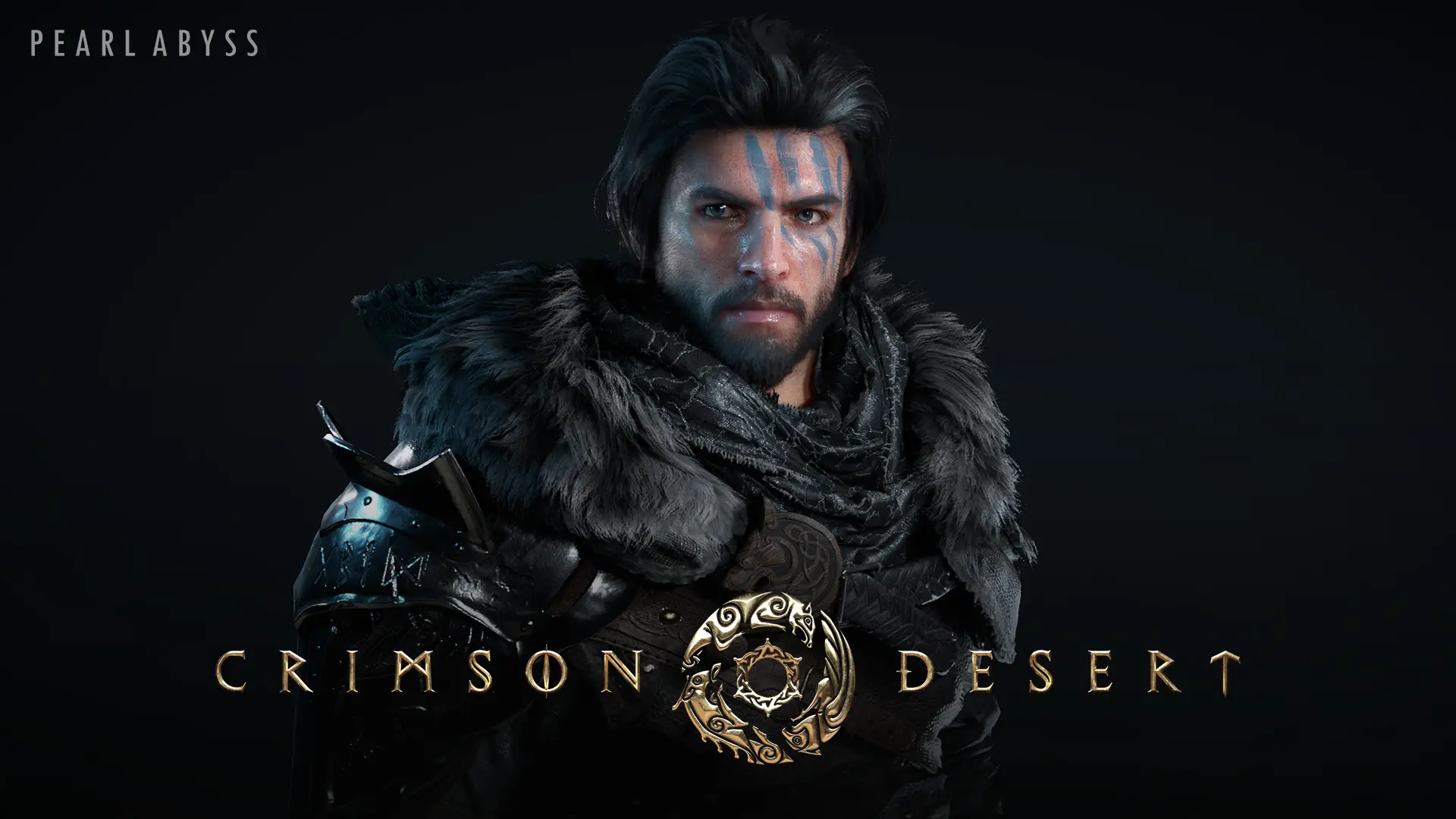
A SANDBOX ADVENTURE TO REMEMBER
Crimson Desert is Pearl Abyss’s long-awaited open-world action-adventure epic, set in the war-torn continent of Pywel (sometimes called Pywell), where you play as mercenary leader Kliff (or Cliff McDuff), rebuilding the Greymane faction amid political strife, mythical threats, and the mysterious Abyss.
Released on March 20, 2026, for PC, PS5, and Xbox Series X/S, it draws on influences such as Skyrim, Elden Ring, Breath of the Wild, and The Witcher while layering on deep survival, crafting, and sandbox systems.
Overall feeling: a passionate, generational passion project that feels like a love letter to unfiltered exploration and discovery, but one that demands patience through rough edges.
Story & Writing
The narrative follows Kliff’s journey to reunite his mercenary group, reclaim territory, and confront looming threats, including the Abyss and rival factions. It starts grounded in the themes of mercenary life and survival, but quickly becomes functional rather than compelling. I would describe the main plot as mundane, with odd pacing, unnatural dialogue (possibly due to translation quirks), and little emotional investment in the characters or stakes. Side content often outshines the core story, with emergent moments and world events feeling more alive. Twists and lore reveal exist but lack the depth or impact of top-tier JRPGs or Western epics; the writing is serviceable at best, with unskippable cutscenes and awkward delivery dragging things down. Emotional highs are rare, mostly from personal discoveries rather than scripted beats, and the ending/epilogue impact feels understated compared to the world’s scale. Overall, the story is the weakest pillar, secondary to gameplay and exploration.

Characters & Bonds
Kliff is a solid but unremarkable protagonist, a competent mercenary leader without much charisma or growth that resonates deeply. Companions and NPCs have potential through camp management, befriending animals/pets (dogs/cats for looting, mounts like bears/tigers/dragons), and faction interactions, but bonds feel underdeveloped compared to those in games like The Witcher or the Trails series. Side characters shine more in quirky moments (e.g., assigning tasks to companions with visible real-time results), but the dialogue often sounds stiff or unnatural. Voice acting is mostly strong (solid delivery in key scenes), though inconsistencies and muffled audio in some areas detract. No deep “bonding events” stand out as memorable; the focus is more on mechanical leadership than emotional ties.
Gameplay & Combat
This is where Crimson Desert truly excels and overwhelms. Combat is expressive, deep, and chaotic: combos, parries, grapples, throws, elemental enhancements, aerial attacks, weapon variety (swords, bows, etc.), and character switching for unique movesets. Horseback battles, large-scale sieges with hundreds of enemies, and wild late-game powers (dragon riding, mech suits) make fights feel epic and empowering. Gear-based progression ties directly to exploration, gathering materials, upgrading at smithies, socket perks, learn moves from enemies, and creating rewarding loops.
Exploration is a gigantic, seamless world with insane density, verticality, draw distance, secrets everywhere (caves, ruins, sky islands, hidden bosses), and activities galore (fishing, cooking, crafting, hunting, gambling, fist fights, stock market investing, bounty hunting, crime system). Systems pile up endlessly, camp building, animal taming, faction control (reclaim POIs from bandits), abyss fragments for branching skills, and encouraging getting lost for hours.
However, onboarding is rough: minimal tutorials after early hours, finicky controls (cumbersome interactions, poor camera), cluttered inventory (starts restrictive, improves with patches/quests), and puzzles that swing from clever to bafflingly obtuse (requiring deduction or specific spots).
Bosses can be thrilling but often unfair/hyperaggressive, with great difficulty spikes that contrast with easy mob clears. This was patched 3 days after release on 23rd March, where Pearl Abyss has adjusted some boss fights to be less punishing.
Missable content and emergent fun reward exploration, with high potential for New Game+.

Presentation (Visuals, Sound, Technical)
Visually stunning and technically impressive: water physics, weather, massive draw distances, dense biomes, and strong performance (60+ FPS on high-end PC, solid on consoles per early reports). The world feels alive with active NPCs, wildlife, and real-time simulations.
The soundtrack is fitting and elastic, with immersive ambient effects (wind, crowds), though the audio can be inconsistent (muffled waterfalls, sterile interiors).
Voice work is good overall, but hampered by odd delivery. Technical issues at launch include bugs (quest breaks, crashes, pathing issues, immortal enemies, infinite loading), pop-in, and finicky controls/camera. UI/menus are functional but not modern, and do not offer great QoL, such as intuitive keybinds.
The control scheme at the start needs some work, and some inputs need adjustment, as they feel clunky at times.


Comparison to Expectations & Genre Peers
Crimson Desert exceeds hype in raw ambition and scale, feeling like a true “everything fantasy” sandbox rather than a bridged sequel or safe bet. It outdoes many peers in exploration freedom and density (Elden Ring meets Breath of the Wild with MMO systems), but falls short in polish, narrative depth, and accessibility compared to The Witcher 3 or Red Dead Redemption 2.
It’s not a “bridge” game; it’s a bold, standalone epic that prioritises discovery over linear progression, setting a high bar for future open-world titles despite flaws.
Who Should Play It? / Final Score & Recommendation
Ideal for open-world lovers, sandbox enthusiasts, exploration completionists, and those who thrive on unguided freedom, community-shared secrets, and hundreds of hours of content (Elden Ring fans, Skyrim veterans, Breath of the Wild explorers). Skip or wait if you need strong stories, intuitive controls, minimal bugs, or quick onboarding; it’s frustrating for casual players or narrative-focused gamers.
After 60+ hours of playing, this is an extremely high-potential game that makes me think what Witcher 4 has in store for gamers. The work developers at Pearl Abyss have done is amazing. So many features have been implemented, and an absolute giant map to explore, with amazing graphics, which are impressive even for a mid-range PC. What they pulled off is impressive.


Leave a Reply